

SEOUL, Feb 22 (Reuters) - South Korea’s exports during the first 20 days of February expanded 16.7% from a year earlier, customs agency data showed on Monday, faster than a 10.5% rise during the Jan. 1-20 period, underpinning the trade-led recovery.

TOKYO (Reuters) - Oil prices rose on Monday as the slow return of U.S. crude output that was cut by frigid conditions raised concerns about supply just as demand is coming back from the depths of the coronavirus pandemic.
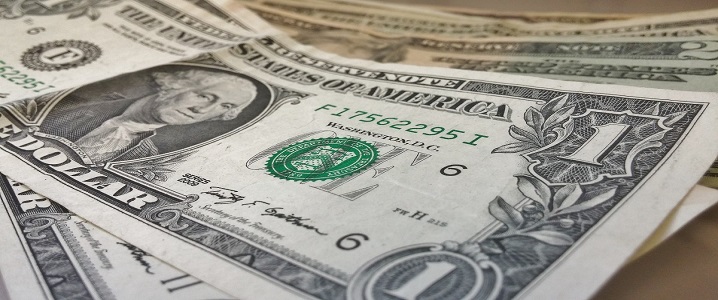
TOKYO (Reuters) - The U.S. dollar fell to a three-year low against its Australian counterpart and teetered near three-year low against the British pound as progress in curbing coronavirus infections boosted sentiment for riskier assets.

TOKYO, Feb 19 (Reuters) - Japan’s factory activity expanded for the first time in 22 months in February, a private-sector survey showed on Friday, as strong export demand helped manufacturers shake off the drag from the coronavirus pandemic.

SYDNEY (Reuters) - Asian stocks pulled back from all-time peaks on Friday as higher longer-dated bond yields and underwhelming U.S. data dented investor confidence in a faster economic recovery from the COVID-19 pandemic, while gold hit a seven-month trough.
MSCI’s broadest index of Asia Pacific shares outside of Japan was last down 0.1% at 733.67 from a record high of 745.89 touched on Thursday.
The index is on track for a small weekly loss after two consecutive weeks of gains.
Since the start of the year, the index has surged nearly 10.5% largely led by easy monetary and fiscal policies around the world.
On Friday, Australia’s benchmark S&P/ASX 200 index was down 0.8% while Japan’s Nikkei fell 0.4%.
Chinese shares started in the red with the blue-chip CSI300 off 0.6%.
“The recent move up in longer dated core yields appears to be weighing on equity investors’ mind,” said Rodrigo Catril, forex strategist at National Australia Bank.
Core bond yields have pushed higher globally led by the so-called “reflation trade” where investors wager on a pick-up in growth and inflation. Successful coronavirus vaccine roll-outs so far and hopes of massive fiscal spending under U.S. President Joe Biden have spurred reflation trades.
Germany’s 10-year yield on Thursday posted its highest close since June, British 10-year yields traded at a 10-month top of 0.65% and U.S. Treasury yields are hovering near one-year highs around 1.3%, a large factor supporting the U.S. dollar.
Rising bond yields hurt the appeal of gold, with spot prices hitting a seven-month low of $1,766 an ounce on Friday.
While rising yields weighed on investor sentiment, “disappointing U.S. jobless figures didn’t help the cause either,” Catril added.
An unexpected increase in the number of Americans seeking jobless benefits hung heavy on outlook. The Labor Department reported initial unemployment claims rose by 13,000 to 861,000, injecting skepticism about how quickly the U.S. economy could rebound from the global pandemic.
Further, U.S. housing starts fell 6.0% in January, the first decline in five months.
On Wall Street, the Dow fell 0.38%, the S&P 500 lost 0.44%, and the Nasdaq Composite 0.72%.
In currencies, the dollar was steady with its index at 90.568.
The British pound hit its highest in over three years at $1.3965 led by the country’s successful vaccine roll-out where 16.5 million people have already been innoculated. It is on track for a sixth straight weekly rise. [FRX]
The euro is poised for a small weekly loss. The single currency was last at $1.2085.
The risk sensitive Australian dollar was on track for a third straight weekly rise, last trading at $0.7762.
In commodities, oil markets saw some profit-taking following days of gains that were driven by a deep freeze across Texas that weighed on production. [O/R]
Brent crude fell $1.17 to settle at $62.76 a barrel. U.S. West Texas Intermediate (WTI) crude futures slipped $1.37 to $59.15 a barrel.
Copper surged nearly 3% to its highest since April 2012 on Thursday led by demand from Chinese investors who returned from a week-long holiday.
Source Reuters
TOKYO (Reuters) - The U.S. dollar maintained its biggest loss in 10 days on Friday after disappointing U.S. labour market data bruised optimism for the country’s speedy recovery from the COVID-19 pandemic.